
Skip to Content
Pursang's "Vintage Morgan" Inspired 3 Wheeler.
CycleKarts 16/03/2025

Pursang's "Vintage Morgan" Inspired 3 Wheeler.

Created by
Pursang

Always loved the Morgans!  Quirky good looks and lightweight, glorious motorcycle type engines and such great performance. With my retirement looming and the cost of participating in the "Classic Motorsports" getting progressively further out of reach, the idea of "spirited demonstrations" in a home-built Cyclekart has a lot of appeal. I have been watching the development of the 'sport' since the early Stevenson days in the USA and I am looking forward to applying some of a lifetime of knowledge and basic skills to this project. If past performance is any guide....this may not be a fast process, but I will document it here, to the end. Cheers, Daryl.

March 22, 2026 amt 1:00 am

Corrected by AI

I decided to take a break from sorting out the swingarm alignment and move on to the rear suspension setup. I had five different single shocks on hand—from a big-wheel pit bike, through a KX250 motocross unit, and up to a Husky 610 shock. I measured each one and worked out their spring rates, then put together a simple Excel sheet with key dimensions like stroke and overall length.

For the first time, I tried using Google’s AI to help choose the most suitable shock and the best mounting position. I have to say, it worked surprisingly well. It felt like having a sharp, fast-thinking assistant in the workshop—someone to bounce ideas off and handle the calculations quickly.

Some parameters were already fixed: swingarm length, rear tyre diameter, the rearward limit of the lower shock mount (to clear the tyre), and a practical mounting height above the swingarm centreline. I also estimated a total sprung weight of about 200 kg (kart plus driver), with roughly 60% over the rear. Other decisions were already made—swingarm pivot height (for anti-squat), rear travel at 125 mm, sag at 30%, and minimum ground clearance of 25 mm at full compression.

The AI processed all of this quickly and flagged a few potential issues with the layout. For example, it questioned seat height and clearance above the top shock mount, since it assumed a typical trike layout. Once I explained that I sit in front of the firewall and referenced the Stevenson spec, it adjusted its approach and carried on.

One thing I noticed—it responds better when you’re clear and specific. Good spelling, punctuation, and even a bit of politeness seem to help it produce better results.

It wasn’t a one-shot solution. It took a few sessions to refine everything. Initially, it gives a correct but fairly basic answer unless you guide it with more detailed requirements. For instance, I wanted to maximise a rising spring rate since I’m not using a linkage system. It also strongly recommended adjustable spring preload, as the chosen shock was slightly softer than ideal, and it provided sensible starting settings.

By the end, it produced a full set of workshop-ready specs, including x-y coordinates for mounting points (with the swingarm pivot as 0,0). The free version can even generate a basic dimensioned sketch, while paid versions go further with CNC or 3D printing files.

Overall, I was very impressed with how useful it was.

P.S. The world’s changing quickly—tools like this are becoming incredibly capable.

Taking a break from swingarm alignment issues, I decided to move ahead with choosing the rear suspension specification and layout.   I had 5 different single shocks to choose from, ranging from a big-wheel pit bike through KX250 MX and finally a Huski 610 unit.   I measured all the springs and calculated their spring rates.
I also created a small excel sheet with all their dimensions eg. stroke, length OA, etc.

For the first time ever, I decided to use Google's AI option, to determine which shock unit and the "best" mounting position.  I was truly surprised how well this worked, sort of like having a really quick and very clever offsider in the workshop with me, to bounce ideas and do the calculations quickly.

Some of the dimensions are fixed, swingarm length, rear tyre diameter, lower shock mount rearmost position (to clear tyre) and practical height above the swing arm centre line. Estimated sprung weight of driver and Kart (200kg wet) and estimated weight distribution (60% rear). I had already chosen the swingarm pivot height, (for anti squat), the rear travel (125mm), sag (30%) ground clearance at full bounce (25mm).

It works through things quickly and raises points where it thinks their might be issues with the practical layout.
I told it that the vehicle was a tadpole trike CycleKart and it got a bit worried about the seat height & clearance above the shock top mount.  I said that I am sitting in front of the firewall and referred it to the Stevenson Spec. It thanked me, and brightened up about the project.  It doesn't have emotions, but does appreciate clear instructions. It says that good spelling and punctuation are useful and so are politeness and thank-you's as they let it know it is giving you a useful result. 

Now that all sounds wonderfully quick and easy, but it took several sessions, as we refined various requirements. It will tend to provide the a 'correct, but very basic' result initially, unless given more specific criteria. for example, I wanted to maximise a rising spring rate, as this is a non-linkage setup (for simplicity). It also got very specific about the need for adjustable spring preload as the chosen shock was a slightly lower rate than 'Ideal'.  It will calculate good initial settings.  At the conclusion of the analysis it produces a workshop list of all the specs and (x,y) locations for the mounts (0,0) is the swingarm pivot. The Pro version (free, but limited use) can even prepare a dimensioned schematic sketch.  Paid versions can do CNC or 3D printer files. All in all, I was very impressed.    

PS. Don't let your Kids/Grand-kids waste their time & money becoming Doctors or Lawyers or Engineers. The World has changed!

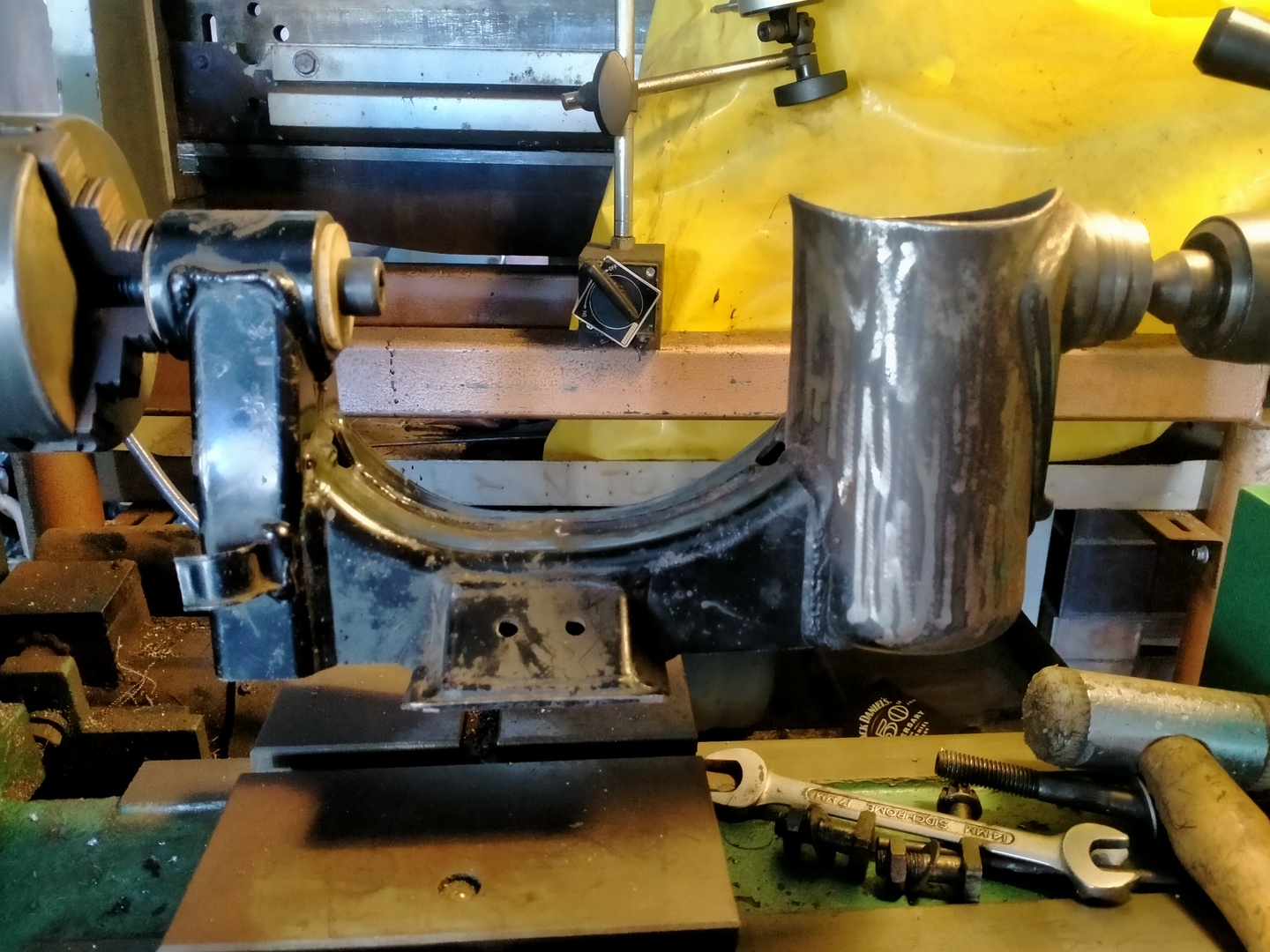
this! IMG20260303141544.jpg
Might not look like much, (5mm x & y) but significant strain if i force it to fit and/or at the end of a 500mm swing arm and a 600mm diam tyre it's multiplied way out of whack! 
3 solutions rotating in my brain. 1:  pie cuts with a hacksaw and welding back. 2: change the 'datum' from the bushed side to the Uni side and relocate the bush. or..... 3: turn a new Plug and drill and tap it off-centre.

Time for another Cider!!!

March 13, 2026 amt 3:29 am

swingarm pivots

Pivot bolts are 12mm 8.8 grade, socket head bolts. 
Non uni side now has a nylon bush through the housing and a tapered bush that seats in the existing bearing cup. This pivot bolt screws into a mounting bracket, welded to the firewall.

The uni side has had the cup removed and steel 'plug' machined to replace it, this is to be welded in. The plug is drilled and tapped to M12. This bolt will be locktited into the plug and will rotate with the swingarm. It will pivot through a urethane bush in its mounting bracket.

 Under any reasonable situation, the bolts and their mounting holes should all be on the same centre line.

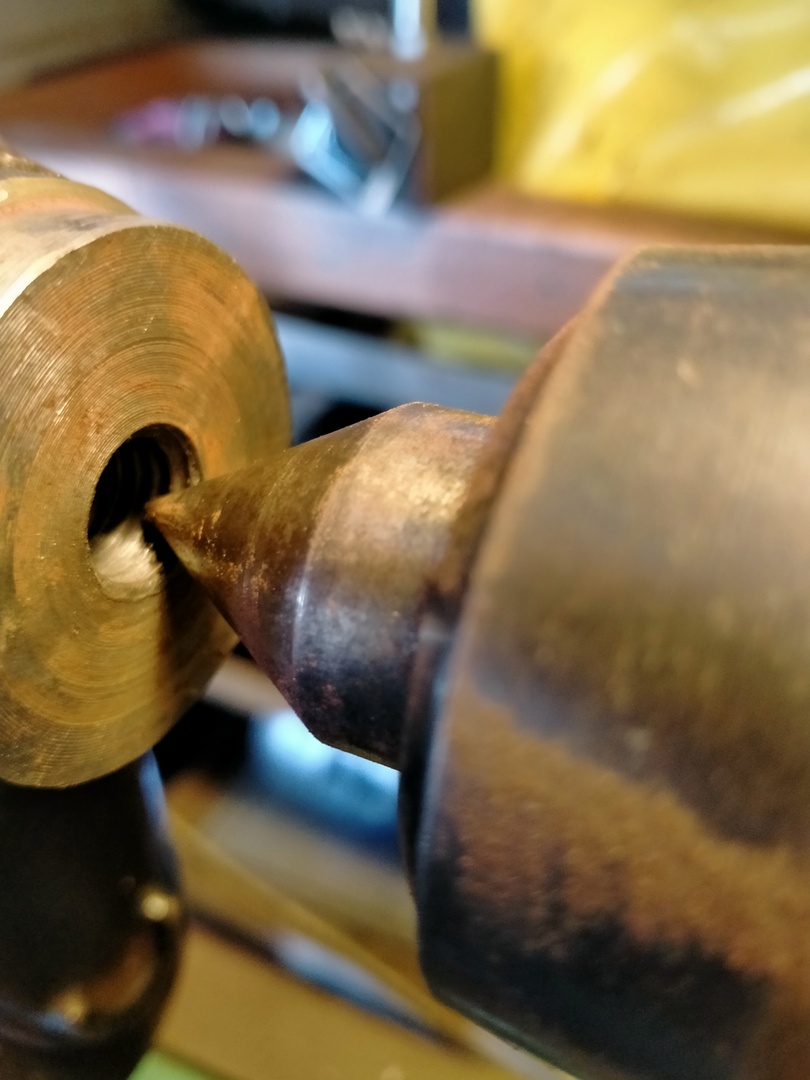
IMG20260303141734.jpg
But this is what is occurring. With the bushed bolt in the lathe chuck, the centre point at the other end is about 5mm diagonally off.

March 12, 2026 pmt 1:13 pm

Update Mar 2026

Time to report where I'm at!....and the "opportunities for learning and growth" experienced while getting there.

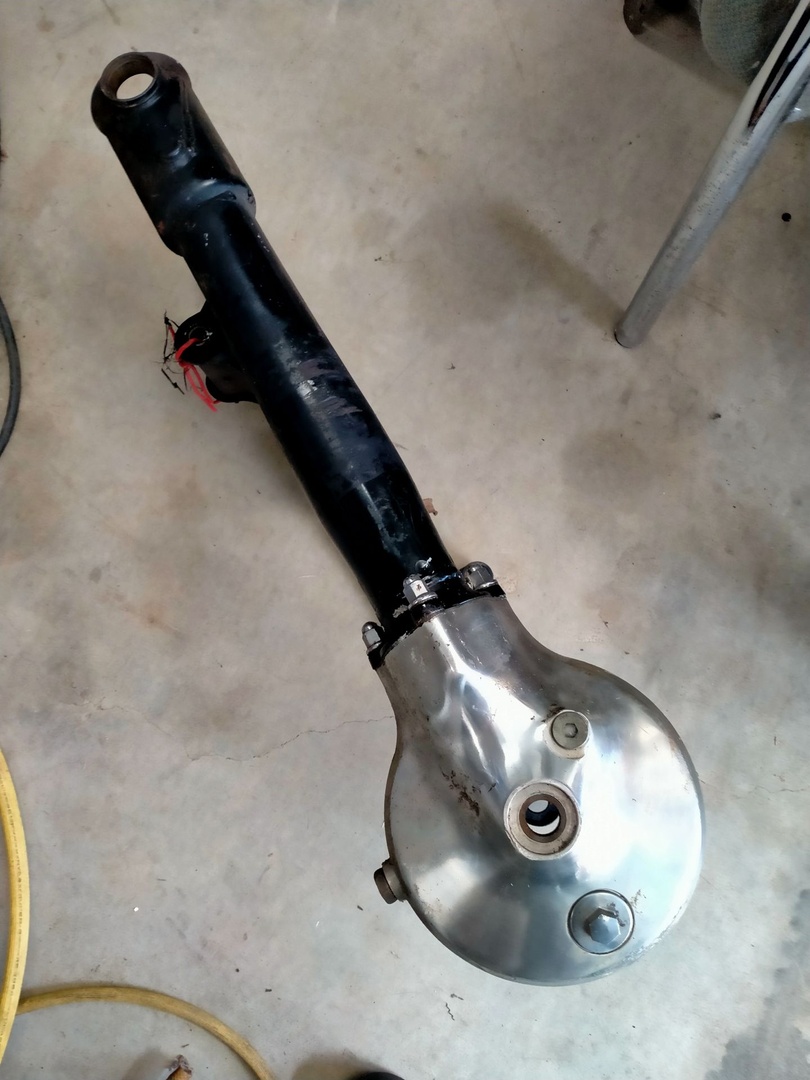
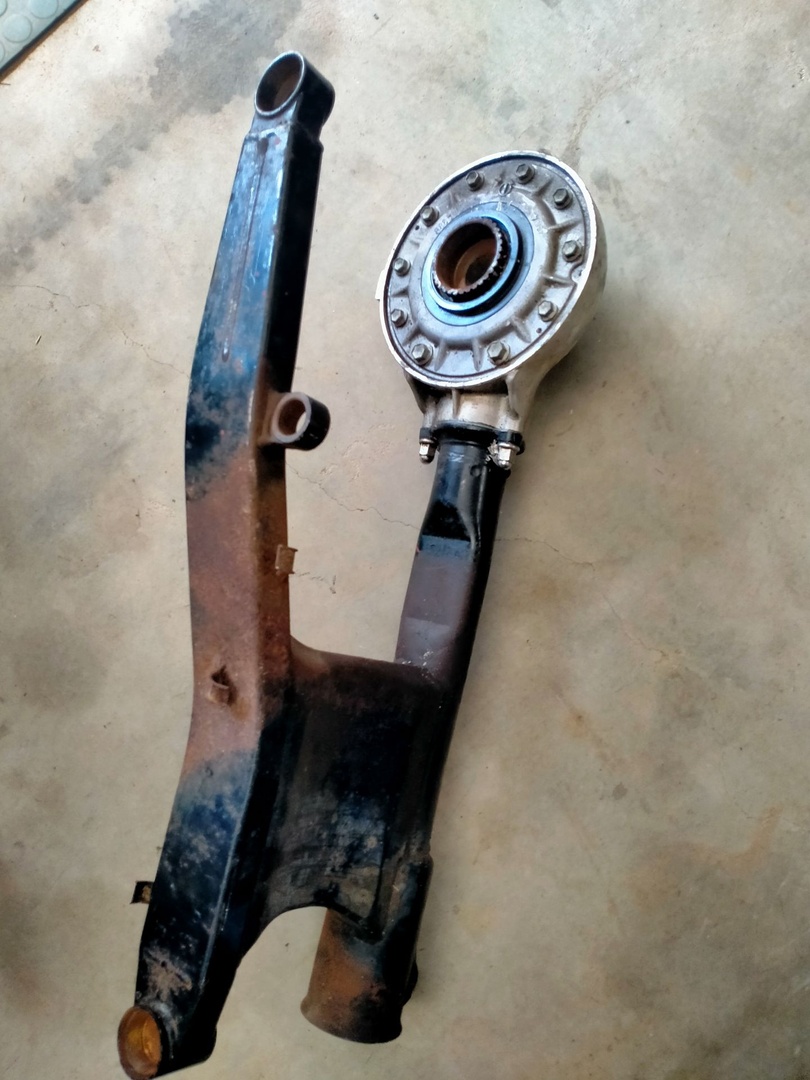
After deciding to do a front engined trike, i dragged out an old Suzuki VL1500 bevel drive swingarm that has been laying in the back of the shed for nearly 15 yrs. It was bought, almost accidentally, as the 'only bid' in a low start Ebay auction, with the possible plan of one day building a full size trike project. It is the bare swingarm only. No wheel, no axle, no uni-joint, no brake disk or caliper assembly, etc.

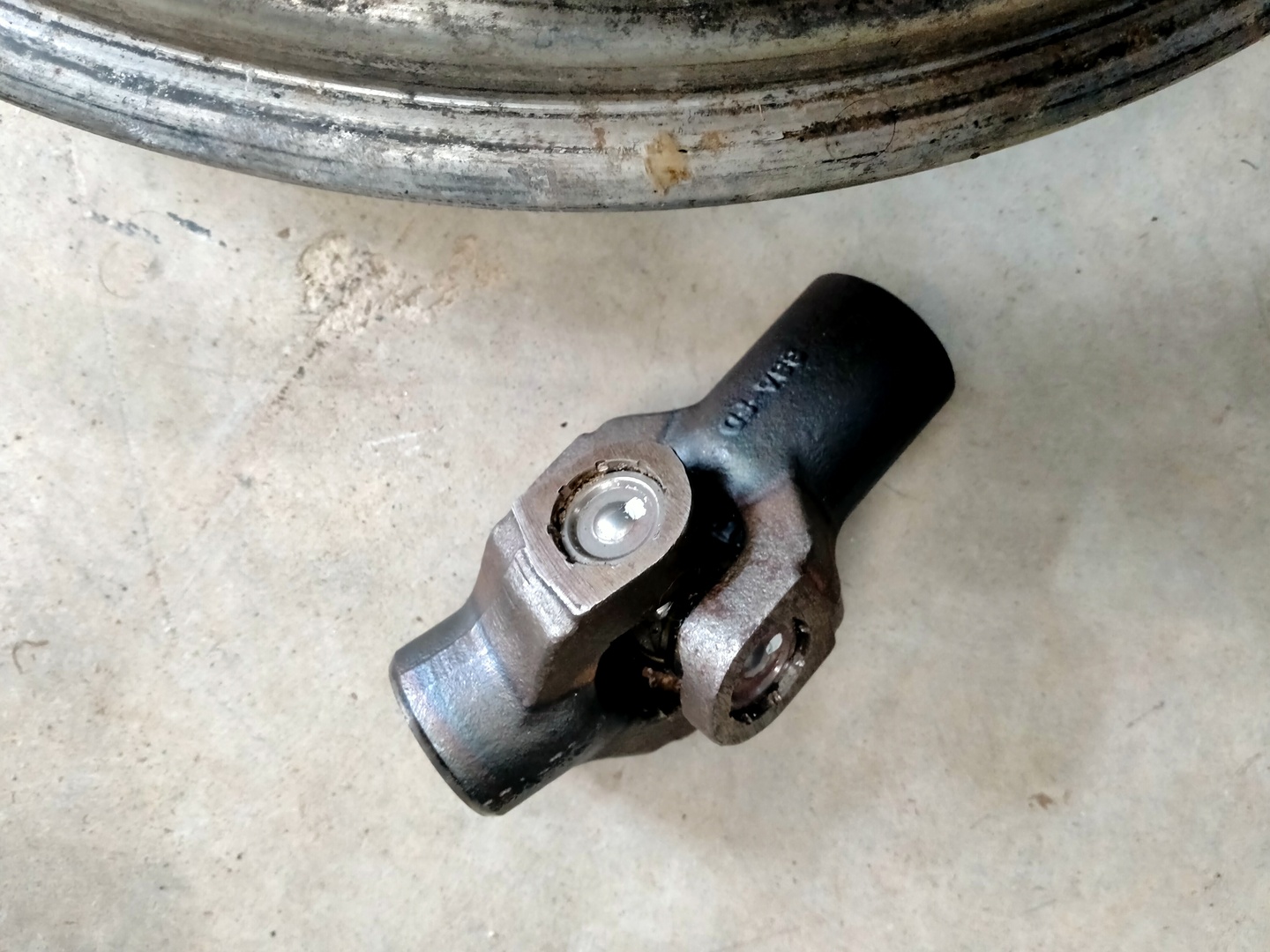
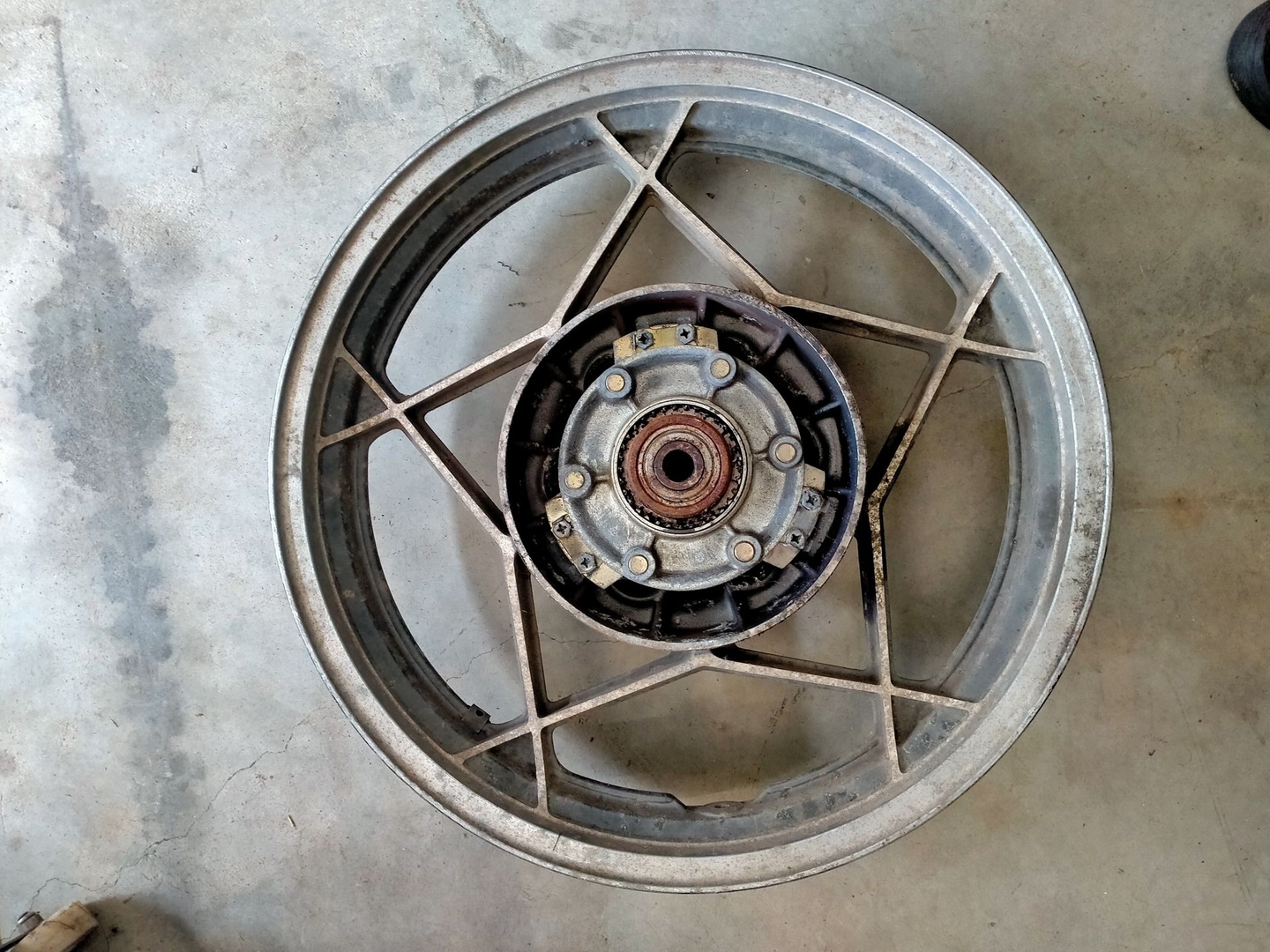
The Vulcan is a big ol' cruiser, that uses a car width 15" wheel.  I needed something more suitable for a cycle kart. Eventually found a narrow 17" wheel, at a reasonable price, from an old 650 Katana, same splined hub to fit the swingarm. Whew!   Brake disks to fit this particular wheel are only available, aftermarket, and around $250 AUD. Totally unacceptable!!!  A S/H Suzuki universal joint was found for under $50 delivered.

Swing arm is pretty solid and heavy and way too long at 610mm pivot to axle. It is being shortened to 500mm by removing a 110mm section of the bracing.  The pivot for the swingarm does not use a through bolt. In the bike frame it is held by 2 tapered bearings squeezing in from both sides. I didn't have any of that. The bearings are readily available...but the threaded mounting bolts and adjusting and lock nuts, not in OZ. Bits from USA & EU are killed by postage costs.  A new system was devised. Pics will show the idea.

AND Then..I found the Problem.  No matter what adjustments I made to the mounting brackets, I could not get the pivot points to align, without force and strain.  In a basic fab like this one, I can live with tolerances say, +/- 1 mm.  After days and days of fiddling and adjusting, I could get nowhere near this.

IMG20251105094053
IMG20251105094124
Type / for commands...IMG20251105094211


January 30, 2026 amt 6:01 am

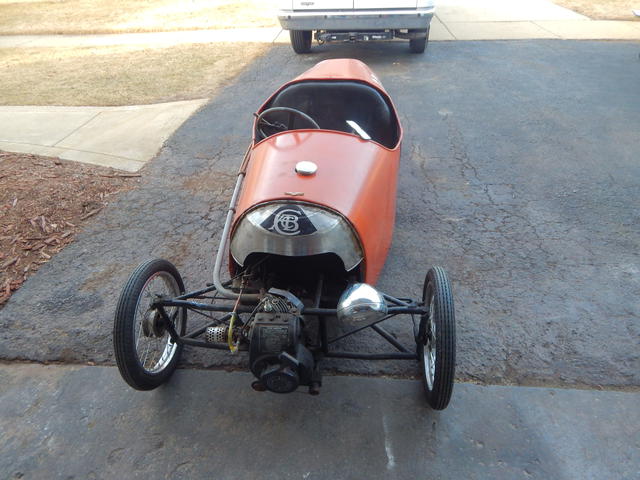
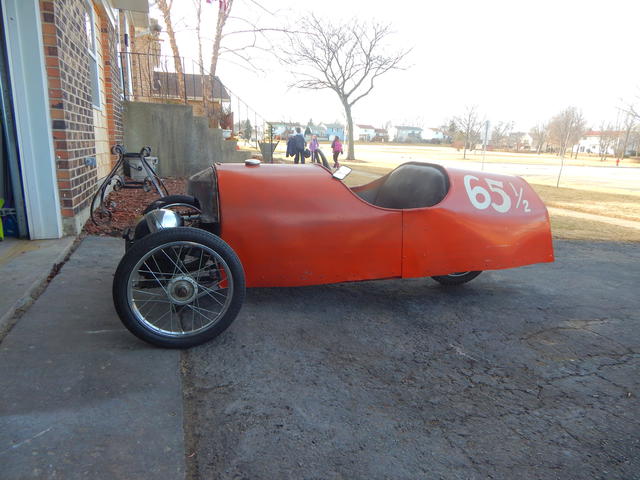
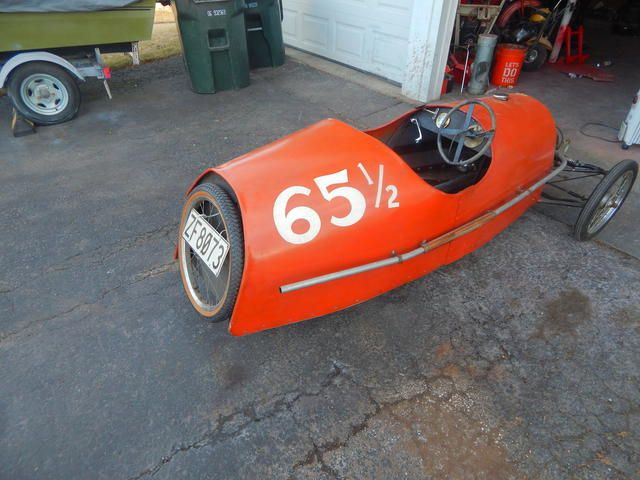
Here is one I found

This one was posted in the US CycleKart club site way back in 2017.

The new owner promised to show how the driveline was done, but looks like nothing more was ever posted.

B&S engine not a GX200, Bodywork will be done differently, but still quite close to my vision.

DSCN9579DSCN9577.JPGDSCN9582

Loading...
No more posts.